
About Friday Headlines – Science Among Us
Science impacts us every single day in ways we frequently don’t recognize. Friday Headlines provides 1 to 3 events, news items, or publications that occurred in the last week or so that are geoscience-related.
25 years ago

Development and adoption of Kernza—A perennial grain crop for sustainable agriculture
Most wheat that is grown by farmers is an annual crop. That is to say that each year farmers plant, grow, and harvest wheat. Farmers generally prepare the field by tilling or some other means before planting the seed each time they grow another crop.
A perennial crop is planted once and then does not need to be replanted. It grows to a good size, the farmers harvest, and then it’s allowed to grow again.
The down side to a perennial plant is that it grows and flowers typically only once a season. The plants are conservative in their growth because they need to save plant energy and biomass to survive over winter. That means that the yield is much lower than it would be for an annual plant.
Annuals on the other hand put all of their energy into flowering and making seeds for the next year’s crop. This increases the yield – but you must plant seeds every year.
OK, before you ask, the grain part of wheat is the seed. The flowers are the fuzzy bits on top. All grasses (including grains like wheat and barley) are flowering plants. The flowers just aren’t bright and showy like what you might put alongside your driveway.
Kernza is the brand name of a perennial wheat. It has a much lower yield than annual wheat, but it has some important benefits. As perennials, the fields will not need regular maintenance and tilling associated with annual plantings – saving energy and reducing the carbon footprint of the farming activities. The complex root system of the perennial plant will protect and hold the soil in place, protecting it from being blown or washed away by weather events. Additionally, the root systems will help hold water and nutrients within the soil, which will preserve the soil for future growing.
Fossil feathers preserved inside dinosaur poop could help explain why some birds survived the dinosaur mass extinction
A coprolite (fossilized feces) was discovered in Cretaceous-aged rocks in Montana. Though it’s not completely certain, the leading hypothesis is that the coprolite was produced by a predatory dinosaur – possibly something like Tyrannosaurus (but don’t quote me on that).
Inside the coprolite were bones of a hesperornithiform bird. This lineage of birds is now extinct, but was known for aquatic habits, similar to cormorants today. The presence of fish scales in with the bird bones supports the conclusion that the dinosaur was feeding in a watery environment.
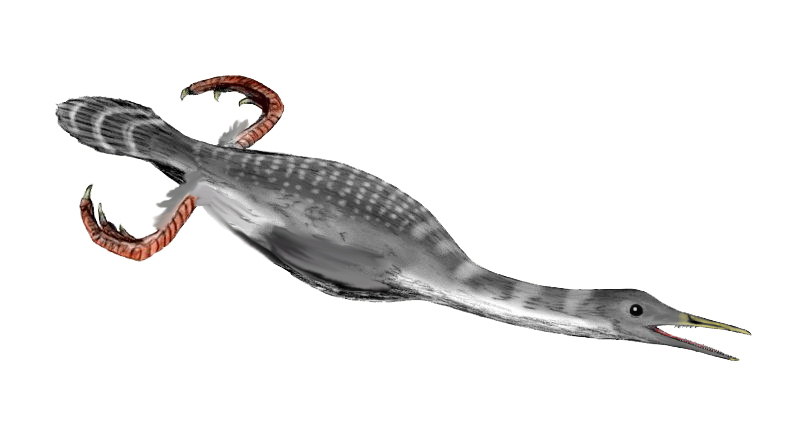
By Nobu Tamura (http://spinops.blogspot.com) – 24 May 2011 version of File:Hesperornis BW.jpg, CC BY 3.0, https://commons.wikimedia.org/w/index.php?curid=106360433
The most interesting thing is the discovery of feathers in the coprolite. The feathers are preserved in three dimensions and were able to be imaged with modern tomographic techniques. Many of the feathers shared structures very much like modern aquatic birds. This teaches us about the origins of certain feather types in modern birds. The structure of these feathers aren’t great at insulating bodies, which may have contributed to the extinction of this bird lineage at the end of the Cretaceous.


Leave a comment