About Friday Headlines – Science Among Us
Science impacts us every single day in ways we frequently don’t recognize. Friday Headlines provides 1 to 3 events, news items, or publications that occurred in the last week or so that are geoscience-related.
Sam Neill – September 14, 1947 – July 13, 2026
An entire generation of paleontologists owes their interest in paleontology to the the Jurassic Park movie franchise, in particular the first movie, Jurassic Park, which was released in 1993. movie franchise, in particular the first movie, Jurassic Park, which was released in 1993.
I was already in college then, planning a career in paleontology by double-majoring in geology and biology. I had envisioned studying dinosaurs and drawing their reconstructions (that’s definitely not how this all worked out).
I did not see Jurassic Park in the theater. I waited until two days after the movie was released to video before I saw it, in the living room of the house I rented, with friends, on the day that I took both the general and geology Graduate Record Exams (GRE). I still remember thinking the dinosaurs were ‘cute.’
The scientific accuracy (plausibility?) in Jurassic Park was reasonable, especially the construction and animation of the dinosaurs themselves. The movie spawned research in the biomechanics of animal motion and a surge of research showing that dinosaurs were fleet-footed, warm-blooded animals. In the years since Jurassic Park premiered, paleontologists have learned that most dinosaurs (including T. rex) sported feathers or fuzz, though this discovery has not been included in any subsequent movies.
The field of paleontology has grown exponentially since Jurassic Park came out, expanding beyond excavating, describing, and naming new species from uncovered bones. Today, paleontology includes geochemistry, mechanical engineering, statistical analysis, and computer modeling and coding.
While more recent Jurassic Park franchise movies are less about science and more about monsters, they’re still influential in drawing people into paleontology.
Statement from the Society of Vertebrate Paleontology

More about Sam Neill can be found on his Wikipedia page: https://en.wikipedia.org/wiki/Sam_Neill
7.3 magnitude earthquake off coast of southern Mexico
This morning a 7.3 magnitude earthquake shook southern Mexico and Guatemala.

Despite being powerful, this earthquake resulted in light damage on land.
The west coast of both North and South America are known for lots of tectonic (earthquake) activity. This is because this coast marks the boundary between the Pacific plate to the west and the North and South America plates to the East. The Pacific plate is sliding under the continents and friction as it moves is what causes the earthquakes.
(The only major exception to this is along the California coast and the famous San Andreas Fault. That’s a topic for a later blog post.)

The image above (also from the USGS) shows earthquakes along the coast of southern Mexico and Guatemala. The yellow star marks today’s earthquake. Darker circles are deeper below the surface. Bigger circles are stronger earthquakes. The red line with triangle marks is the line where the Pacific plate (to the bottom left) starts going under the North American plate (to the upper right).
This process of one tectonic plate going under another is called subduction and is what is responsible for the Fukushima earthquake and tsunami of 2011 in Japan.
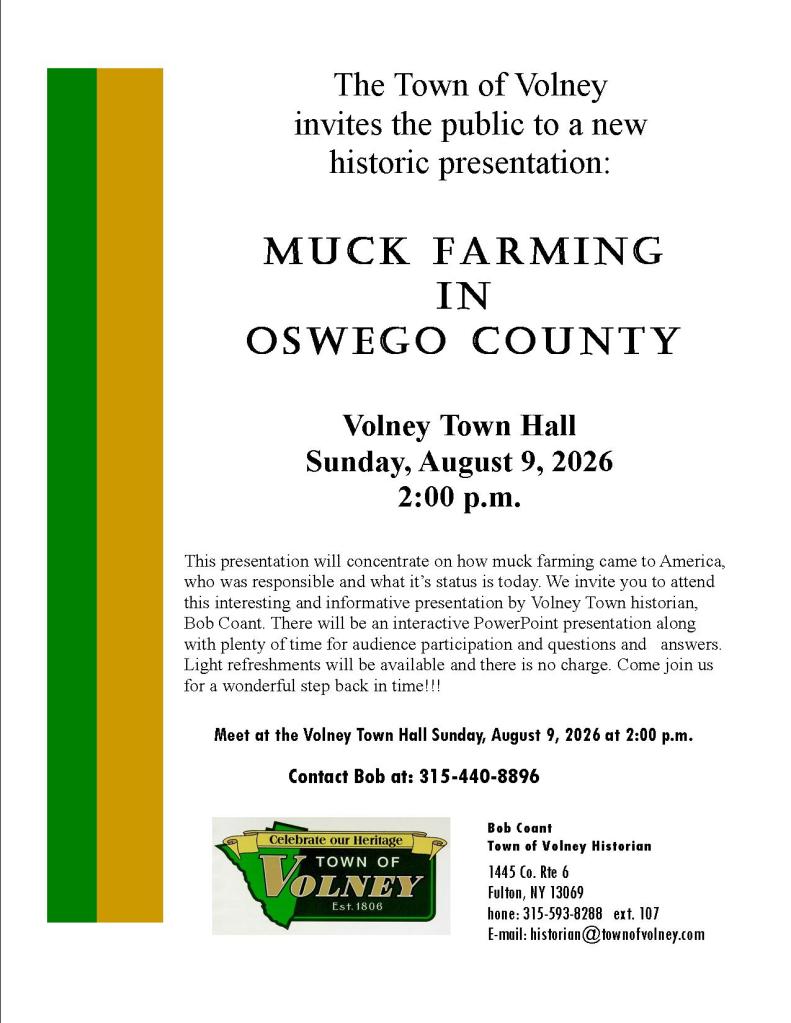
Muck Farming in Oswego County
Muck is a highly organic soil common along the southern coast of Lake Ontario. Muck soils are great for vegetable gardening and have a great impact on the economy of Wayne County (where EPOCH Analysis is).
On Sunday, August 9, Town of Volney historian, Bob Coant will be giving a presentation on the influence of Muck in Oswego County and about the origins of the Muck itself.
I’ll be attending this talk to learn more about the impact of Muck on the area, as I work to develop special testing packages for Wayne County (and nearby) farms.


Leave a comment